Branding and visual details modified due to NDA. Design process and solutions remain true to the original project.
Overview
Background
Neuronova Tutoring connects students with qualified tutors through a web-based platform. With students increasingly managing their lives on mobile devices, the company needs a mobile solution to remain competitive and meet evolving user expectations.
Problem
Students struggle to manage their tutoring experience when away from their computers. They cannot quickly book sessions, check schedules, or receive timely notifications about upcoming lessons. This creates friction in the user experience and leads to a competitive disadvantage.
Solution
A native mobile app that enables students to seamlessly book sessions, track their learning progress, and stay engaged.
Branding and visual details modified due to NDA. Design process and solutions remain true to the original project.
Overview
Background
Neuronova Tutoring connects students with qualified tutors through a web-based platform. With students increasingly managing their lives on mobile devices, the company needs a mobile solution to remain competitive and meet evolving user expectations.
Problem
Students struggle to manage their tutoring experience when away from their computers. They cannot quickly book sessions, check schedules, or receive timely notifications about upcoming lessons. This creates friction in the user experience and leads to a competitive disadvantage.
Solution
A native mobile app that enables students to seamlessly book sessions, track their learning progress, and stay engaged.
The Project Brief
A mobile-first, action-oriented app for self-service booking and key tasks. Goal is to match competitors where users never visit the website and only use the app.
"There are some apps that we use where we never visit the website, we only use the app. Like Uber. That's what we need - a mobile app for key actions, not just information."
— Elliot, Founder
The Process
User Research
Learning what's missing in the current tutoring experience.
We conducted interviews to understand the current needs of users utilizing educational/tutoring platforms. Our research revealed five core needs: personalized learning, tutor credibility, progress tracking, flexible scheduling, and peer engagement.
Competitive Analysis
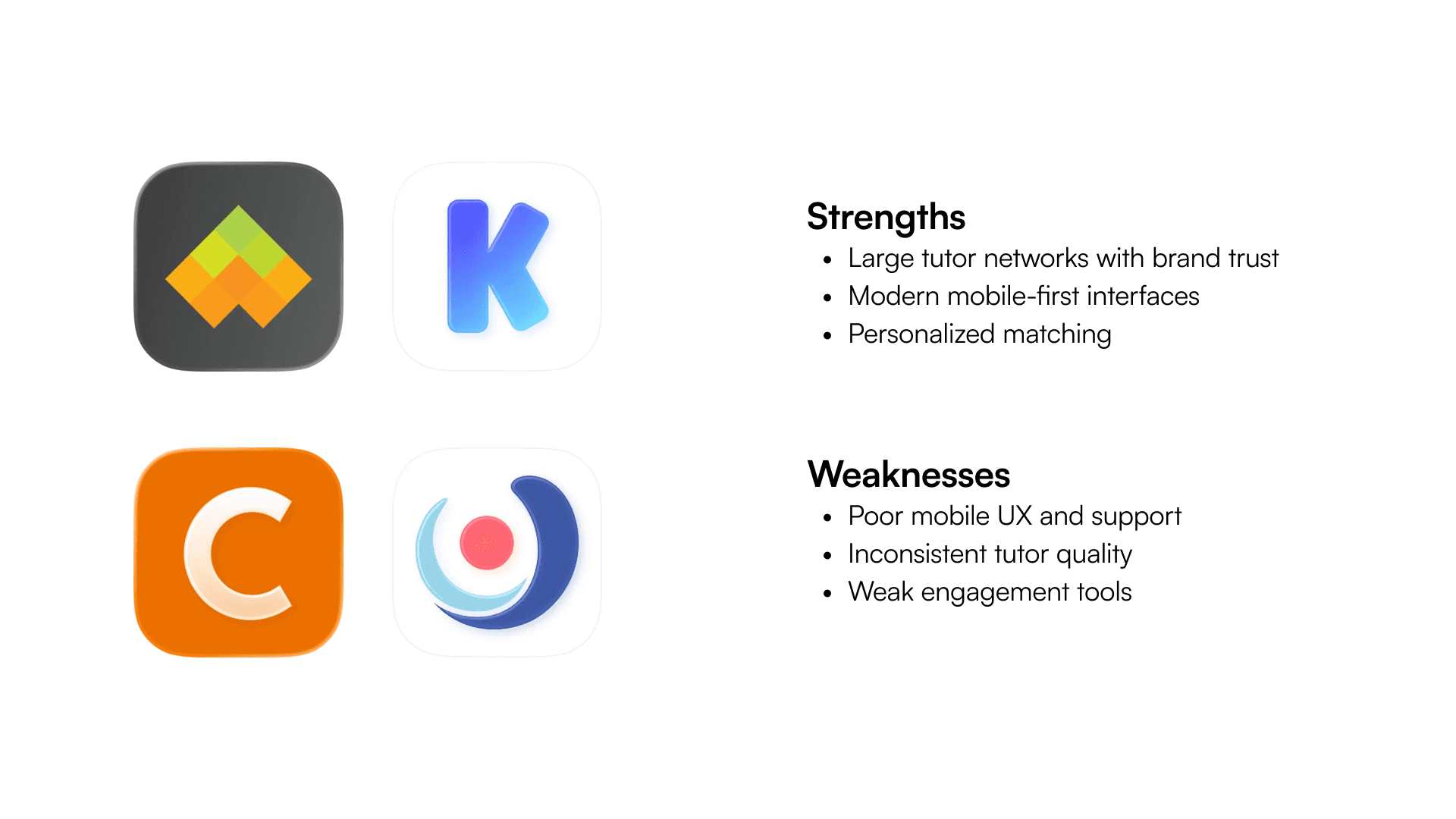
Existing platforms excel at matching and scale but struggle with mobile usability, quality control, and keeping students engaged.
We examined existing mobile apps to learn what works for students today and where current platforms fall short in delivering seamless mobile experiences.
Problem Statements
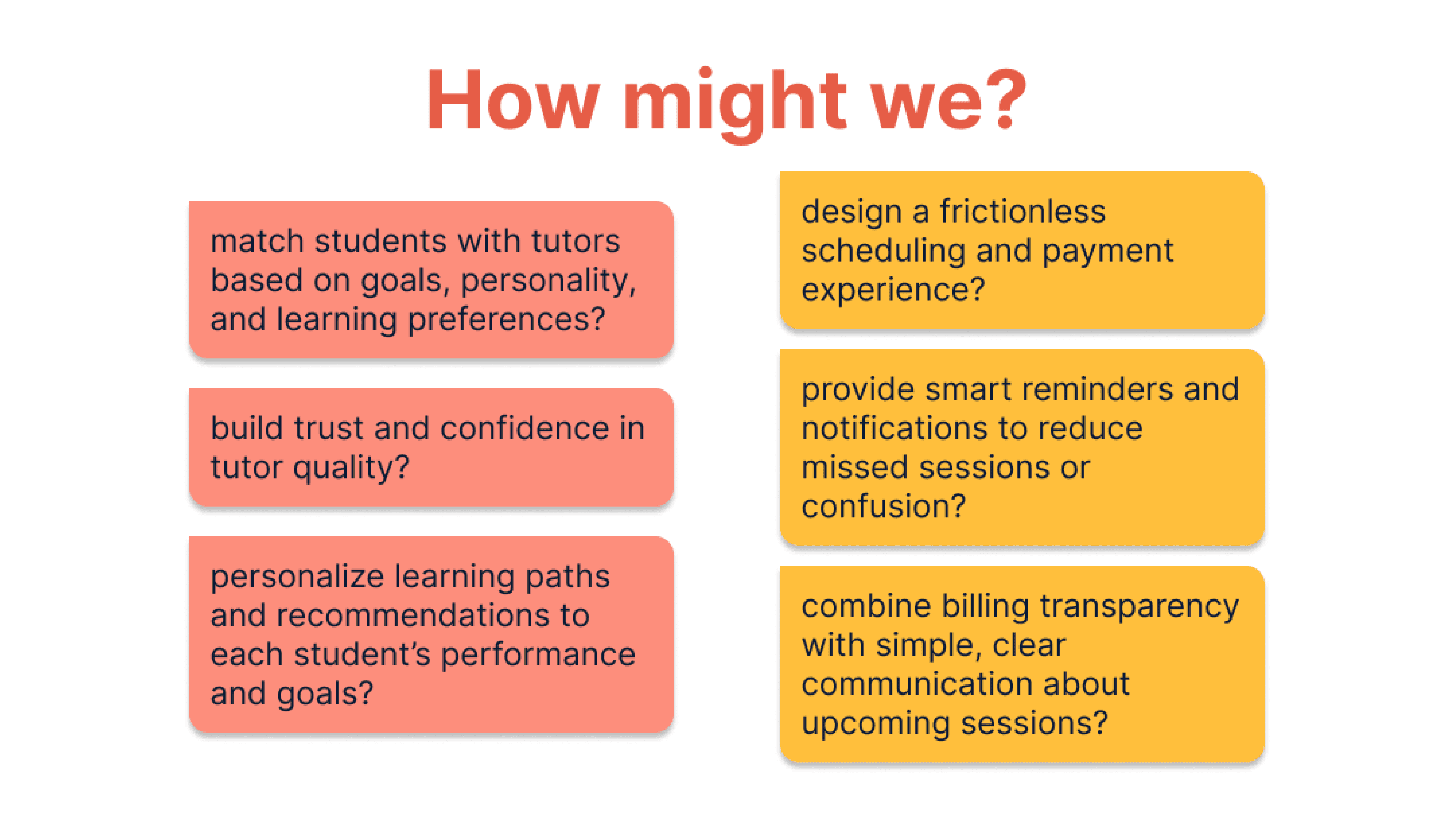
Parents of young students and adult learners struggle to find the right fit and manage tutoring efficiently.
Learners and parents of young students need a way to find tutors who match their learning styles and manage sessions seamlessly because they want confidence in their educational investment without sacrificing time or convenience.
Personas
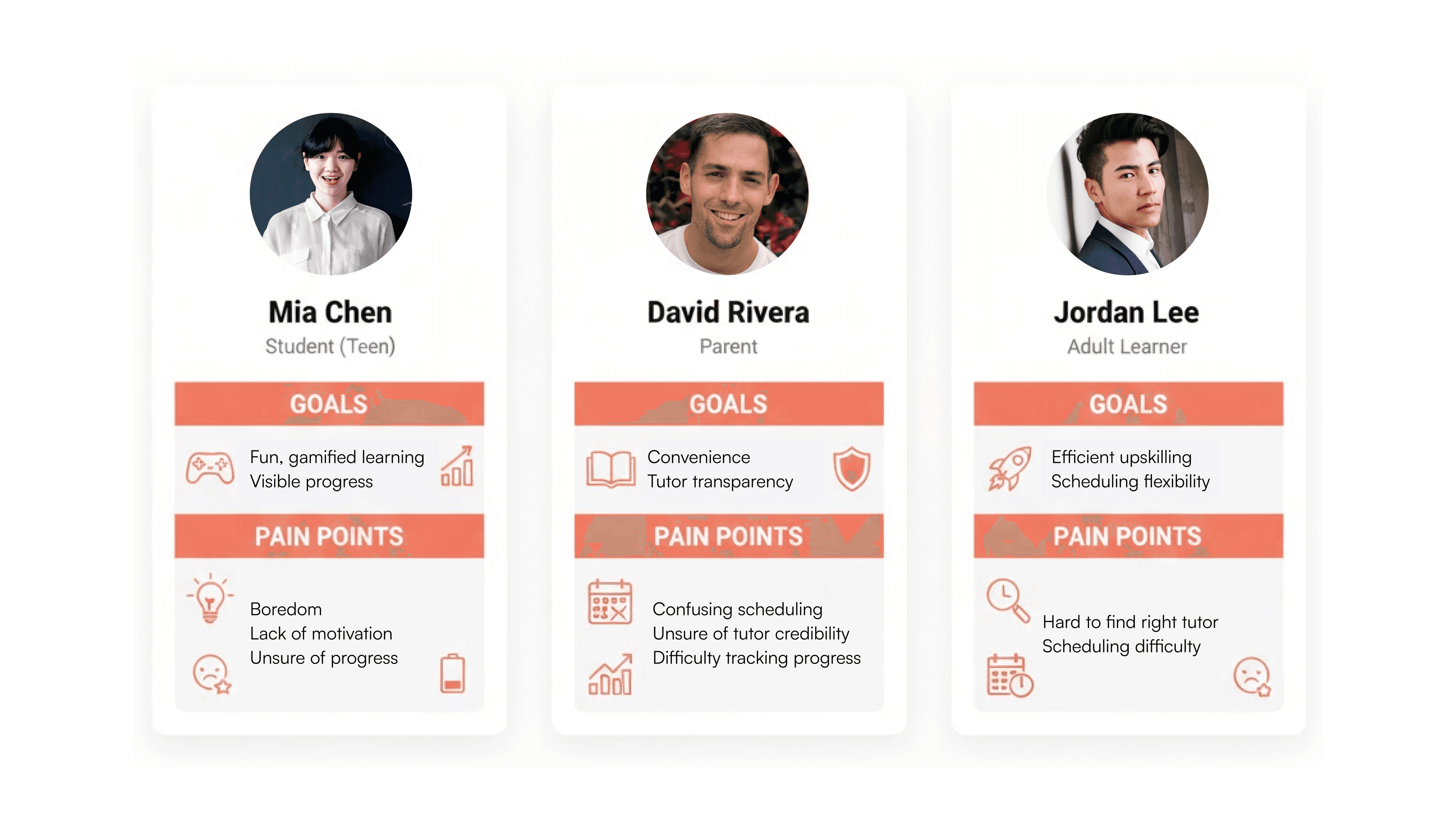
Meet our users: parents managing education for their children, students seeking motivation, and adults pursuing personal development.
We developed personas from user research to represent our primary audiences and keep their needs central throughout the design process.
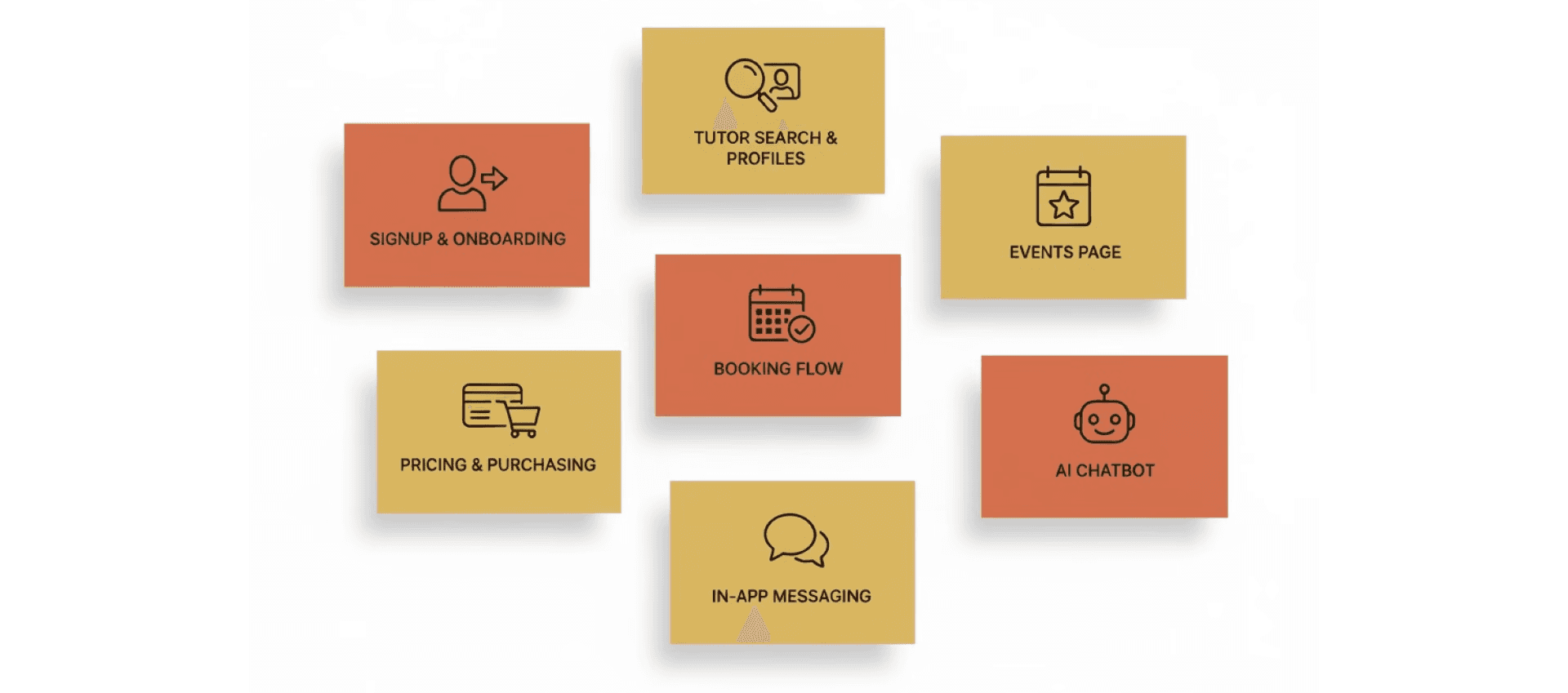
Feature List
Based on user research insights and founder priorities, we identified core features that address the most critical user needs while establishing a competitive mobile-first foundation.
Low Fidelity Designs
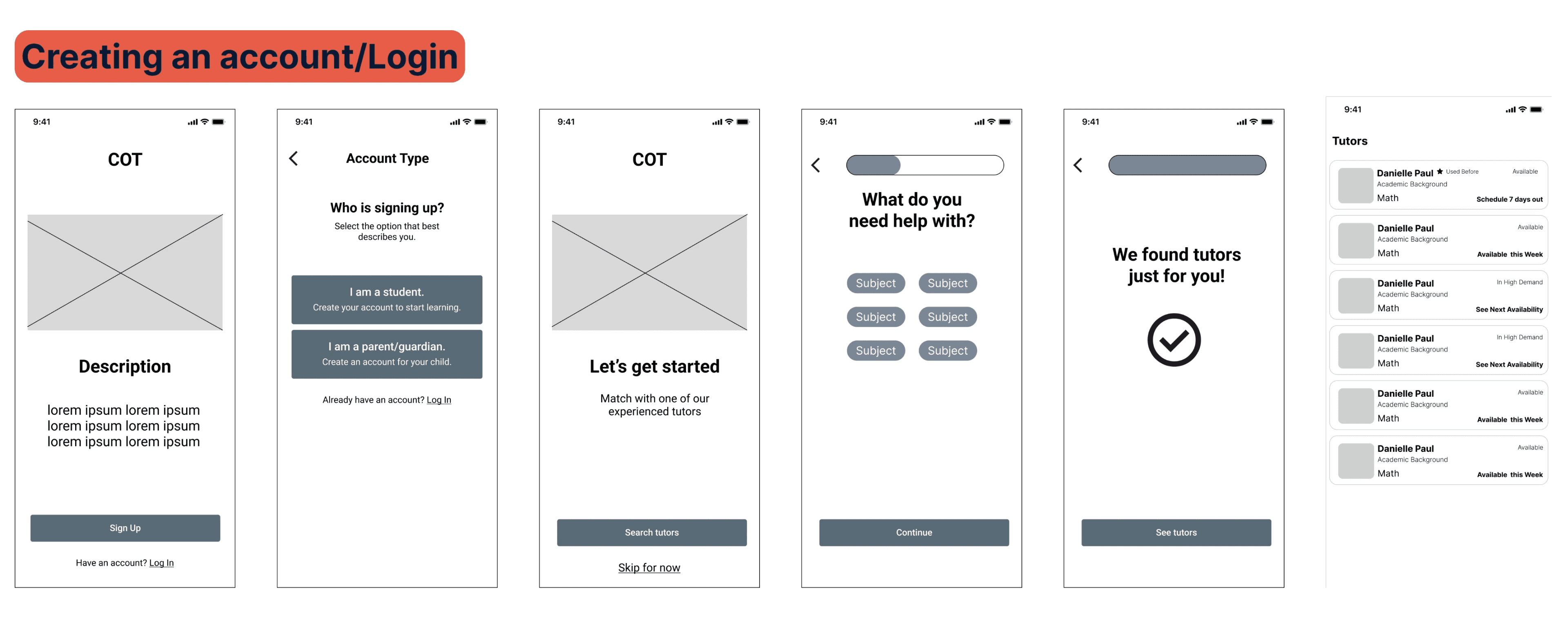
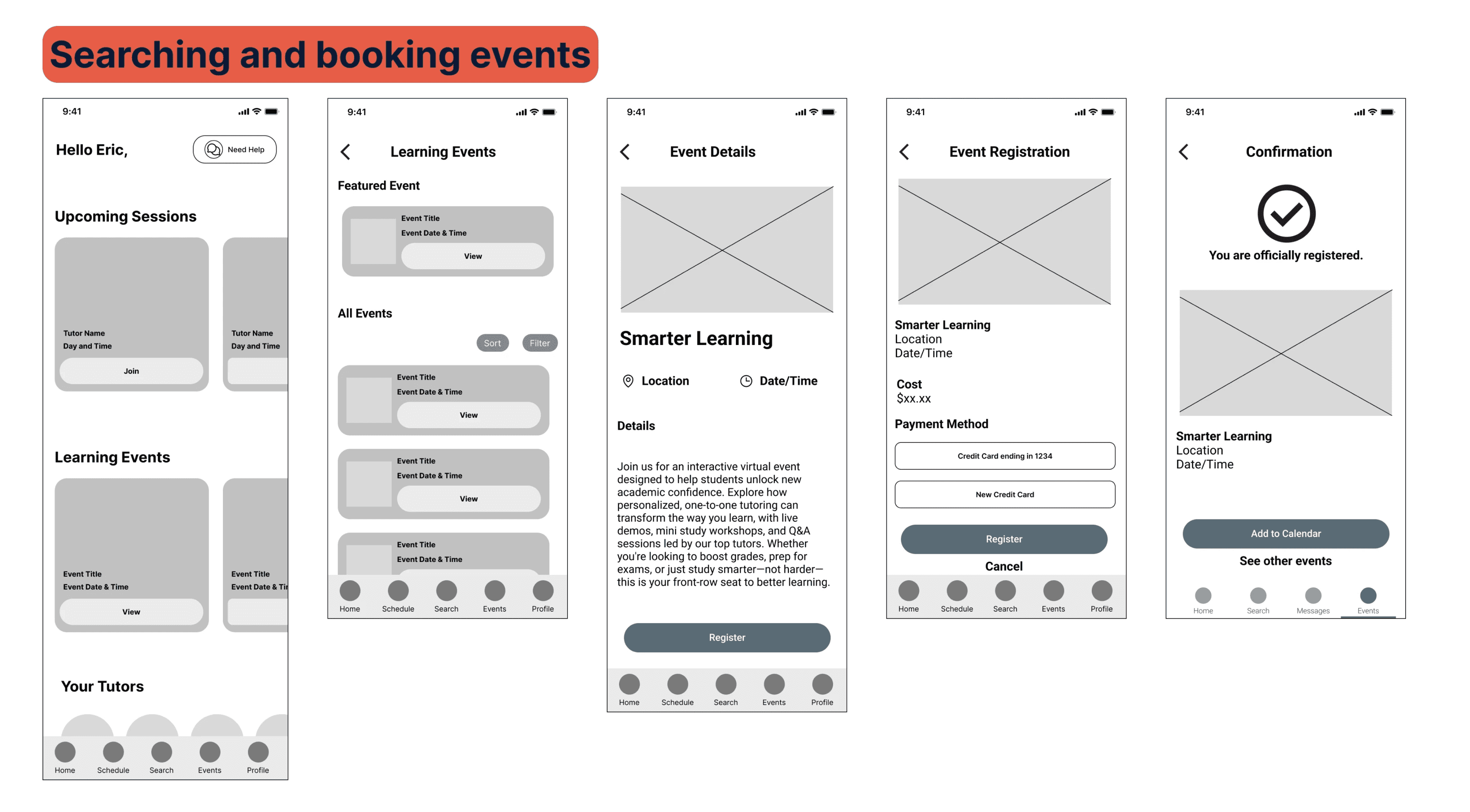
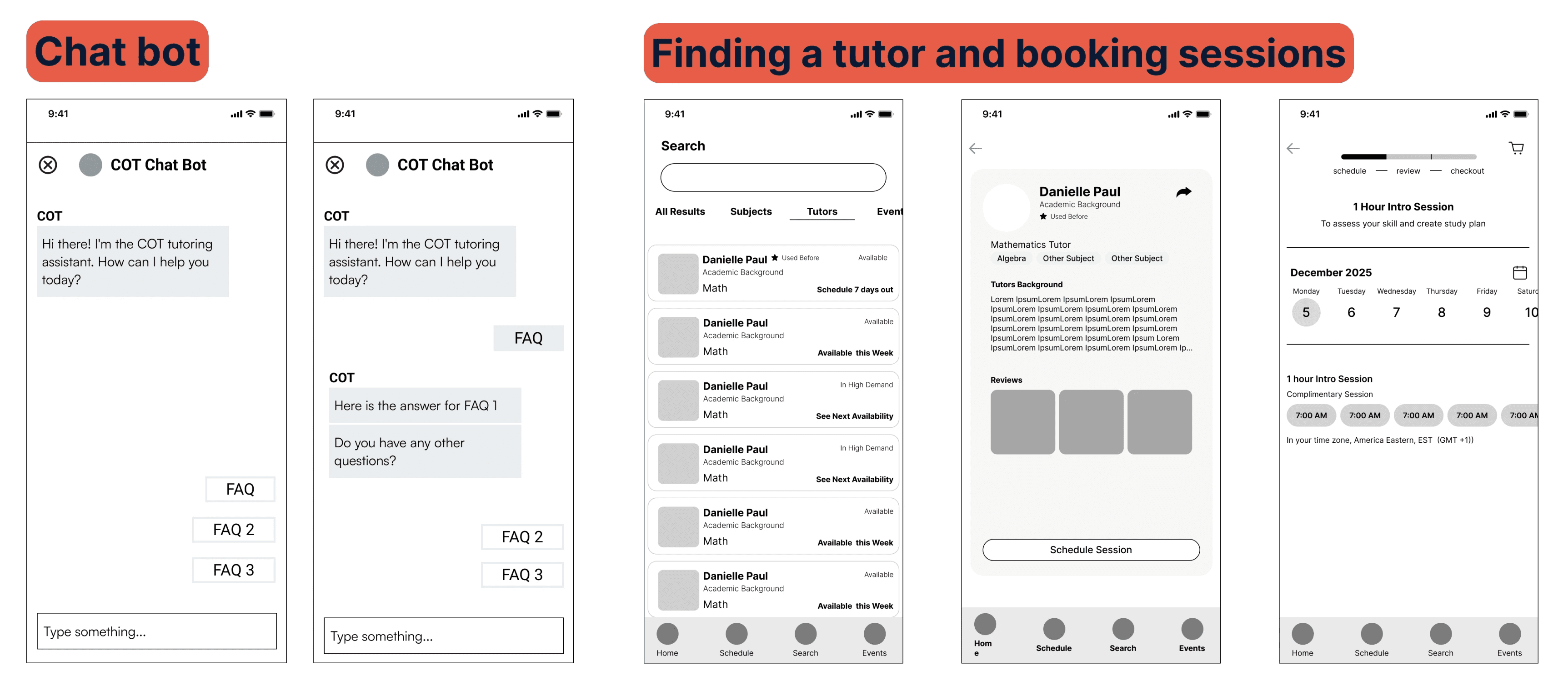
The design process was started with low fidelity designs.
Given the time constraints for this project, we utilized AI tools such as Claude and Stitch to help with rapid ideation and iteration. Working collaboratively with my design partner, I led the development of the following task flows and their corresponding screen designs.
High Fidelity Designs
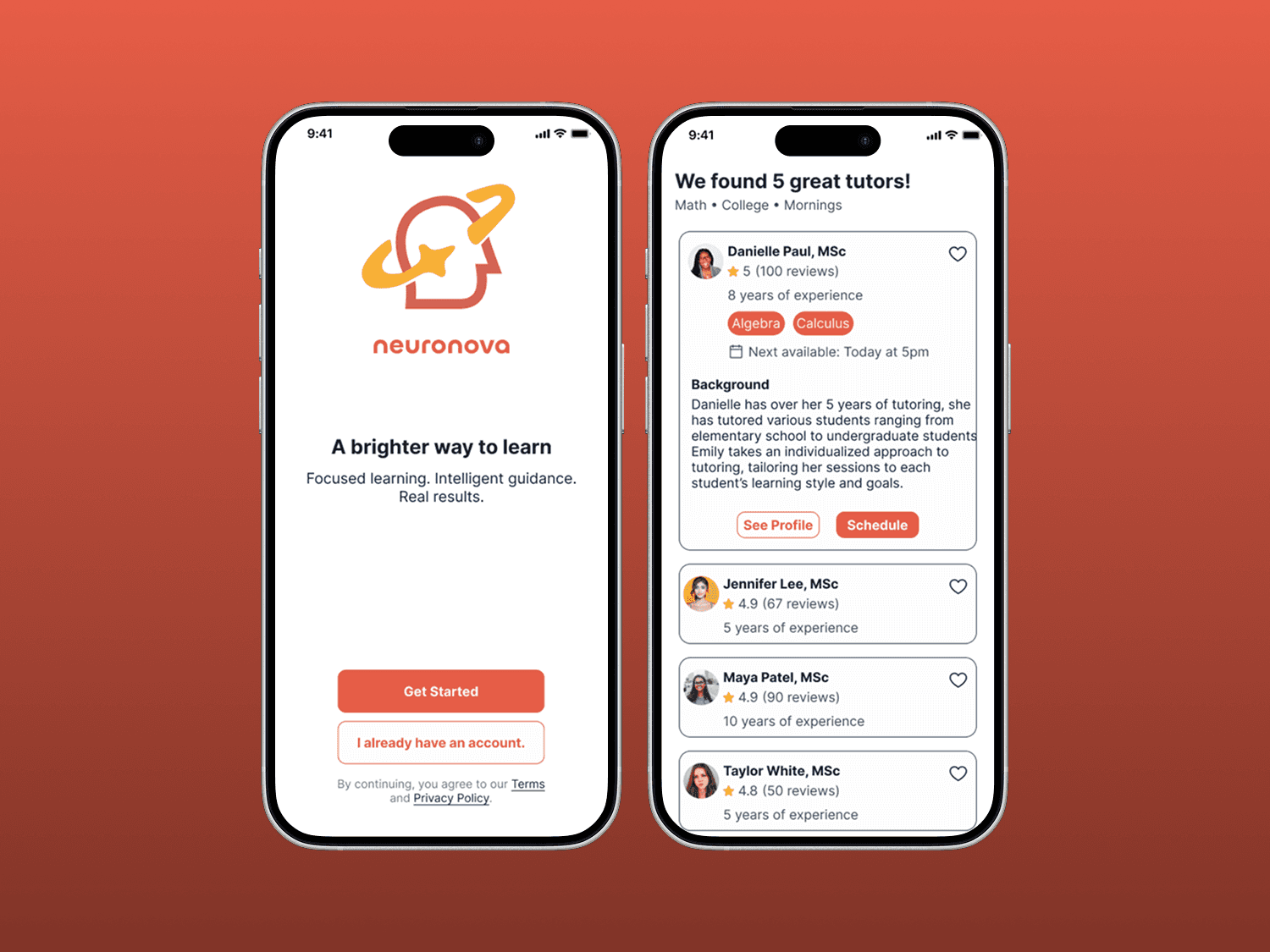
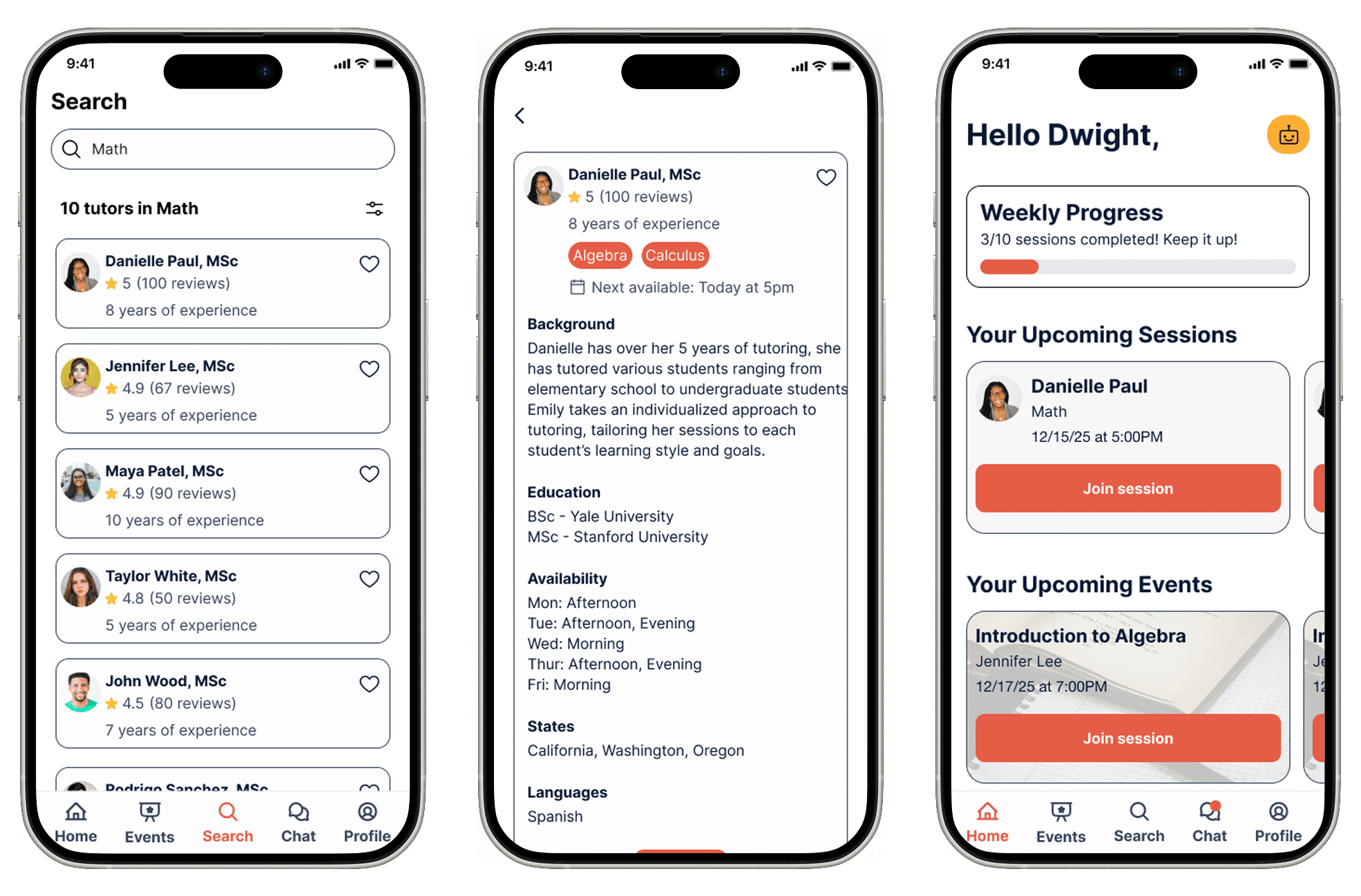
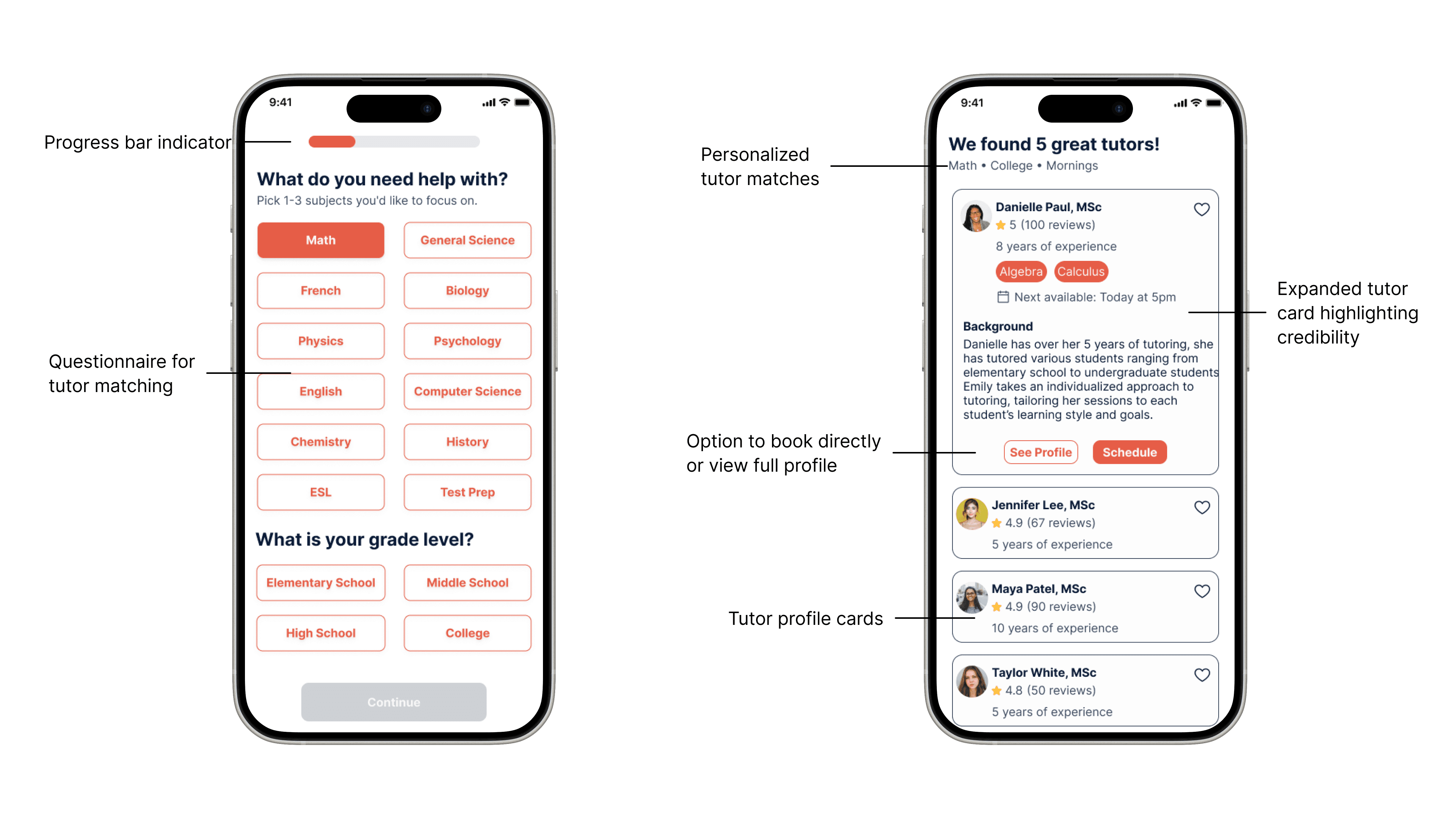
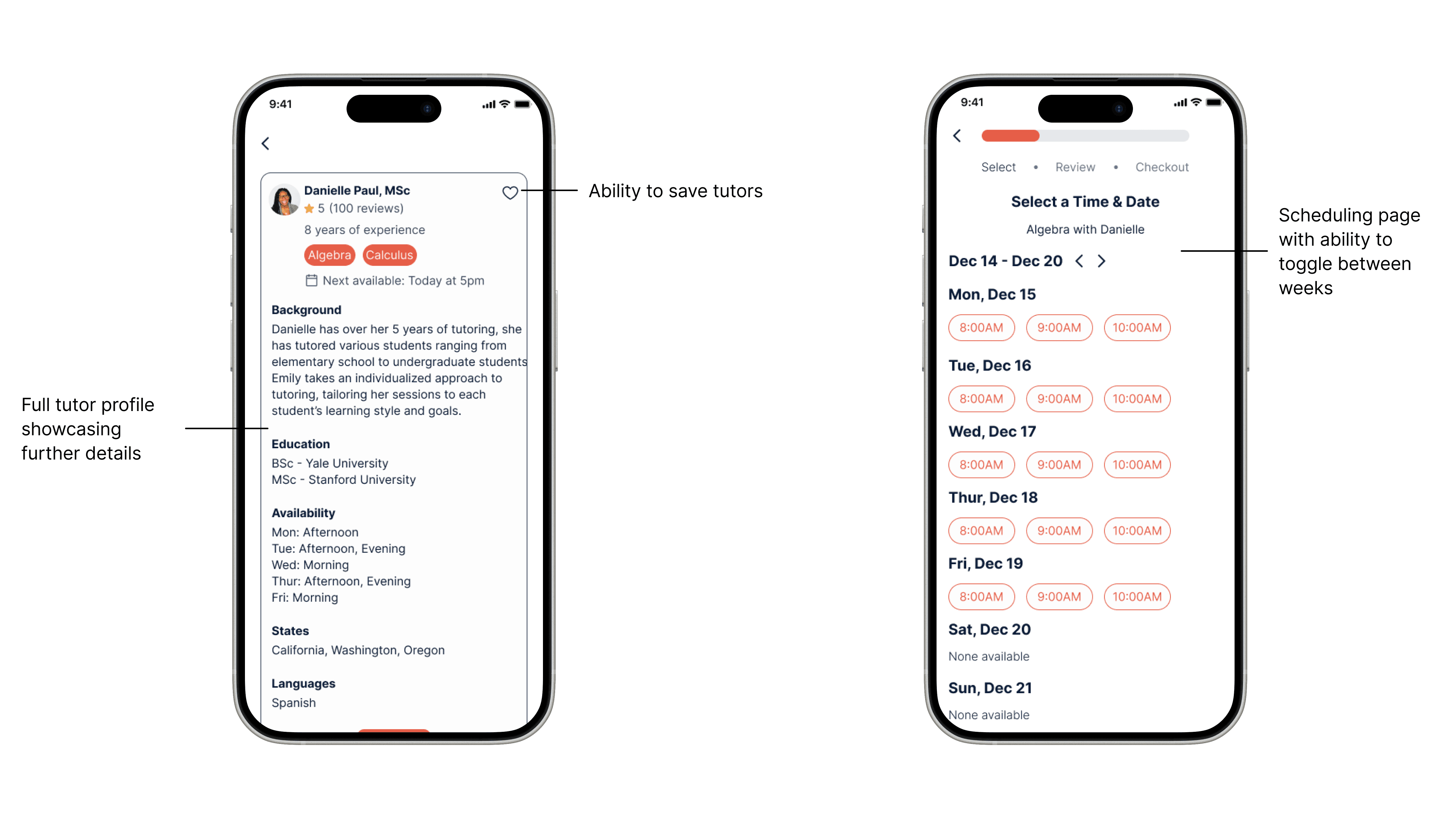
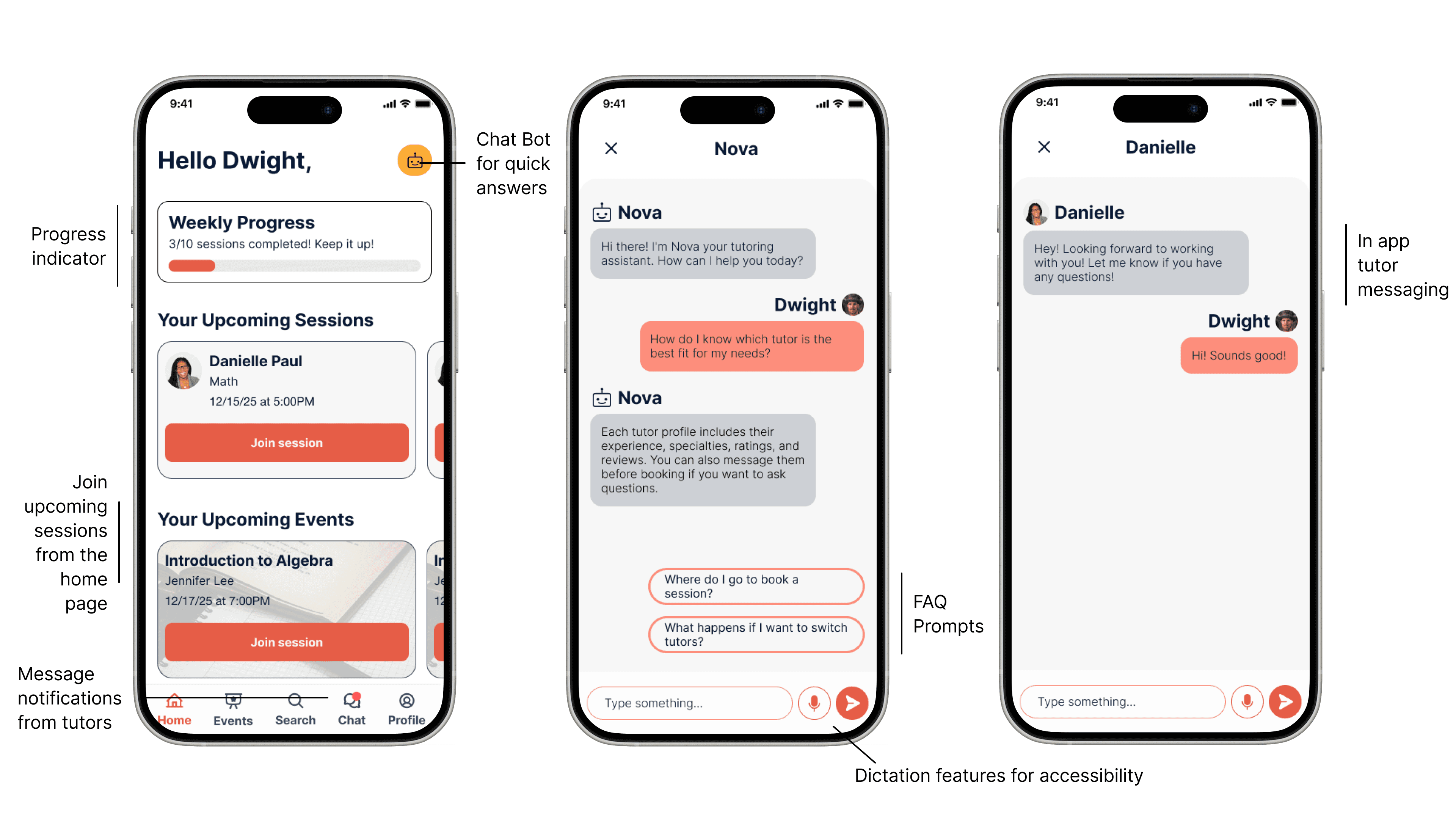
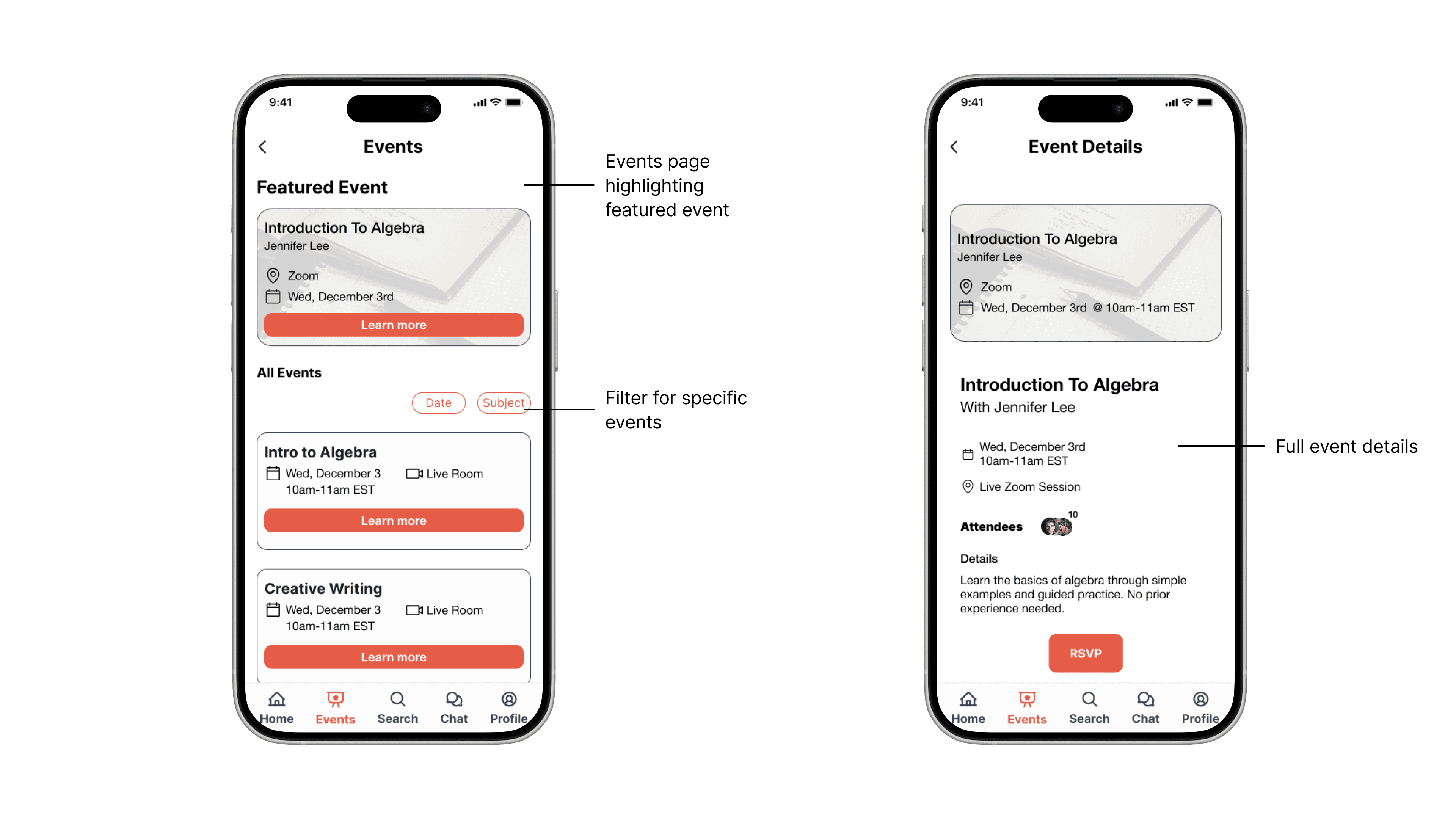
We tested low-fidelity wireframes to validate core interactions, then elevated the designs to high-fidelity with full branding and UI refinement.
Users navigated most features successfully, but scheduling sessions proved most challenging. This insight drove iterations to streamline the booking and scheduling experience.
Next Steps
Design Handoff
Equipping the client with complete design files for MVP development.
In our final presentation, we shared the finalized high-fidelity prototypes with the client discussing user needs while aligning with business goals. All design assets, Figma files, and documentation were delivered in an organized format to facilitate the client's next steps — technical feasibility discussions with their development team and scoping of the MVP build phase.
Reflections
Key Takeaways
Learning to collaborate when time is short and stakeholders have strong opinions.
One of the biggest challenges was balancing user needs with business constraints. I learned to frame design decisions around business impact, not just user preferences. This shifted conversations from subjective to objective. Working with another designer taught me the value of clear roles and consistent communication through weekly syncs and critiques. We used Notion for project management and AI tools for fast ideation to meet our tight timeline. This experience reinforced that great design requires communication, compromise, and strategic prioritization.
Next Steps
Design Handoff
Equipping the client with complete design files for MVP development.
In our final presentation, we shared the finalized high-fidelity prototypes with the client discussing user needs while aligning with business goals. All design assets, Figma files, and documentation were delivered in an organized format to facilitate the client's next steps — technical feasibility discussions with their development team and scoping of the MVP build phase.
Reflections
Key Takeaways
Learning to collaborate when time is short and stakeholders have strong opinions.
One of the biggest challenges was balancing user needs with business constraints. I learned to frame design decisions around business impact, not just user preferences. This shifted conversations from subjective to objective. Working with another designer taught me the value of clear roles and consistent communication through weekly syncs and critiques. We used Notion for project management and AI tools for fast ideation to meet our tight timeline. This experience reinforced that great design requires communication, compromise, and strategic prioritization.
Next Steps
Design Handoff
Equipping the client with complete design files for MVP development.
In our final presentation, we shared the finalized high-fidelity prototypes with the client discussing user needs while aligning with business goals. All design assets, Figma files, and documentation were delivered in an organized format to facilitate the client's next steps — technical feasibility discussions with their development team and scoping of the MVP build phase.
Reflections
Key Takeaways
Learning to collaborate when time is short and stakeholders have strong opinions.
One of the biggest challenges was balancing user needs with business constraints. I learned to frame design decisions around business impact, not just user preferences. This shifted conversations from subjective to objective. Working with another designer taught me the value of clear roles and consistent communication through weekly syncs and critiques. We used Notion for project management and AI tools for fast ideation to meet our tight timeline. This experience reinforced that great design requires communication, compromise, and strategic prioritization.