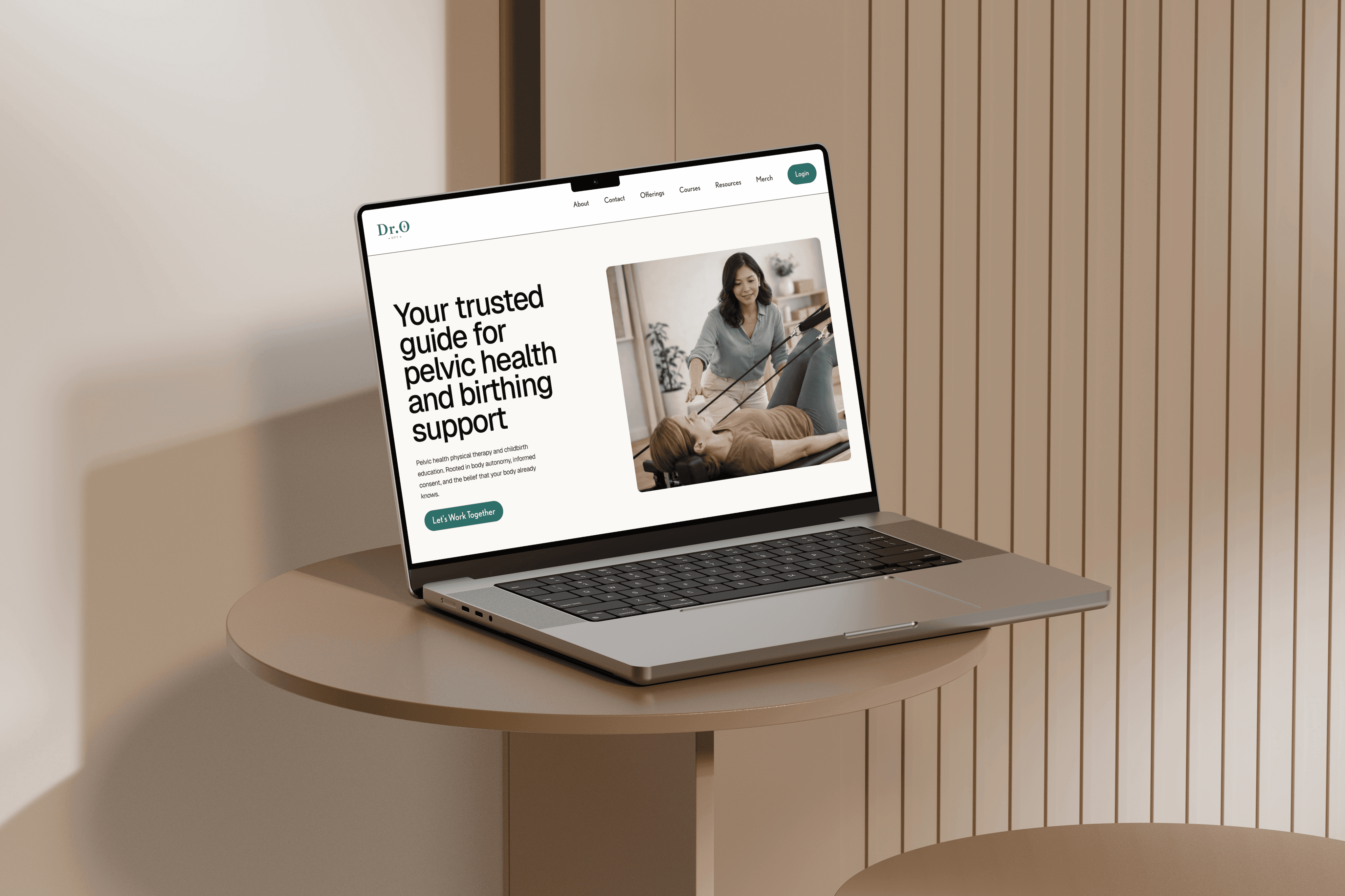
Kinetiq
Enhancing patient engagement and reducing clinician burnout through a modern home exercise program builder web app.
Role
UX/UI Designer
Industry
Health
Year
2025

Overview
Background
Physical therapy clinicians work in a high-pressure environment where productivity standards and administrative burdens often compete with patient care. Between managing heavy caseloads, navigating clunky electronic medical record (EMR) systems, and racing against limited documentation time, clinicians face mounting stress and burnout. This doesn't just affect therapists — it directly impacts patients, who experience decreased engagement in their treatment and poorer outcomes as a result.
Problem
Home exercise programs (HEPs) are a critical component of physical therapy treatment, often determining whether patients successfully recover between sessions; yet, the tools meant to support this process are failing clinicians.
Physical therapists and physical therapist assistants spend excessive time on repetitive tasks such as, building exercise programs, tracking patient progress, and updating documentation, while using HEP software that's outdated and difficult to navigate. These inefficient interfaces slow clinicians down when they need to move quickly, pulling focus away from what matters most: patient care.
Solution
A modern HEP builder web application that dramatically improves speed and efficiency for physical therapy clinicians. Through an intuitive interface and streamlined workflows, the tool enables therapists to create personalized exercise programs quickly — reducing administrative burden and giving them more time with patients.

The Process
User Research and Competitive Analysis
Learning from clinicians and researching current solutions.
Initiated the project with comprehensive user research, analyzing competitors and identifying gaps with current rehab software. To understand the daily realities of physical therapy clinicians, I conducted one-on-one interviews with PTs and PTAs across diverse clinical settings and experience levels. These conversations explored how clinicians manage documentation, communicate with patients, and plan treatments, revealing critical pain points in their workflows.
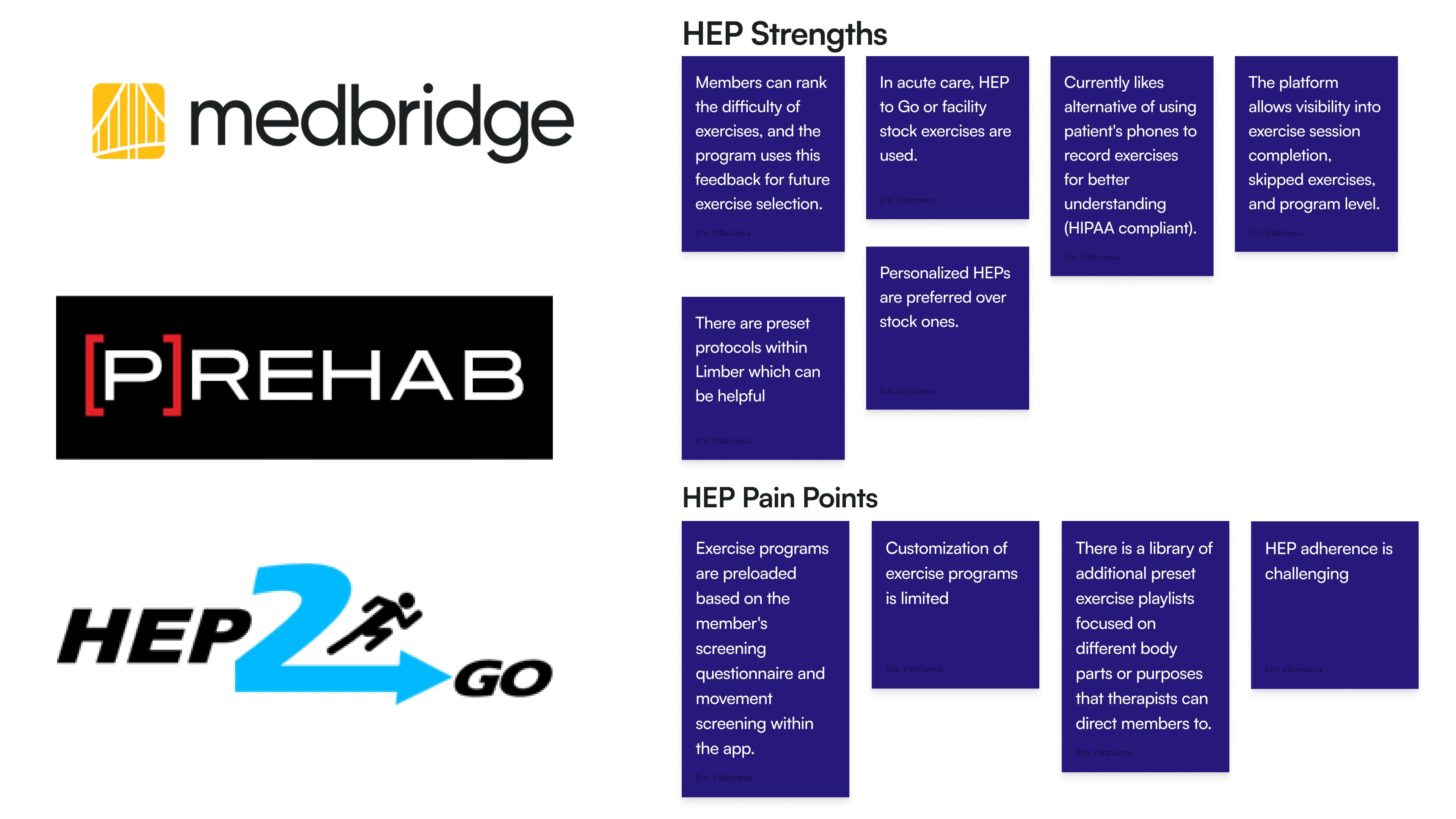
Key Findings
Research revealed the following:
Clinicians are burned out from high caseloads and excessive after-hours documentation.
Existing HEP tools are inefficient, with limited modification options and time-consuming customization that disrupts workflow.
Patient education is lacking, making it harder for patients to understand and engage with their treatment.
Core user needs include flexible exercise modifications, easy customization, and better patient education.
Define
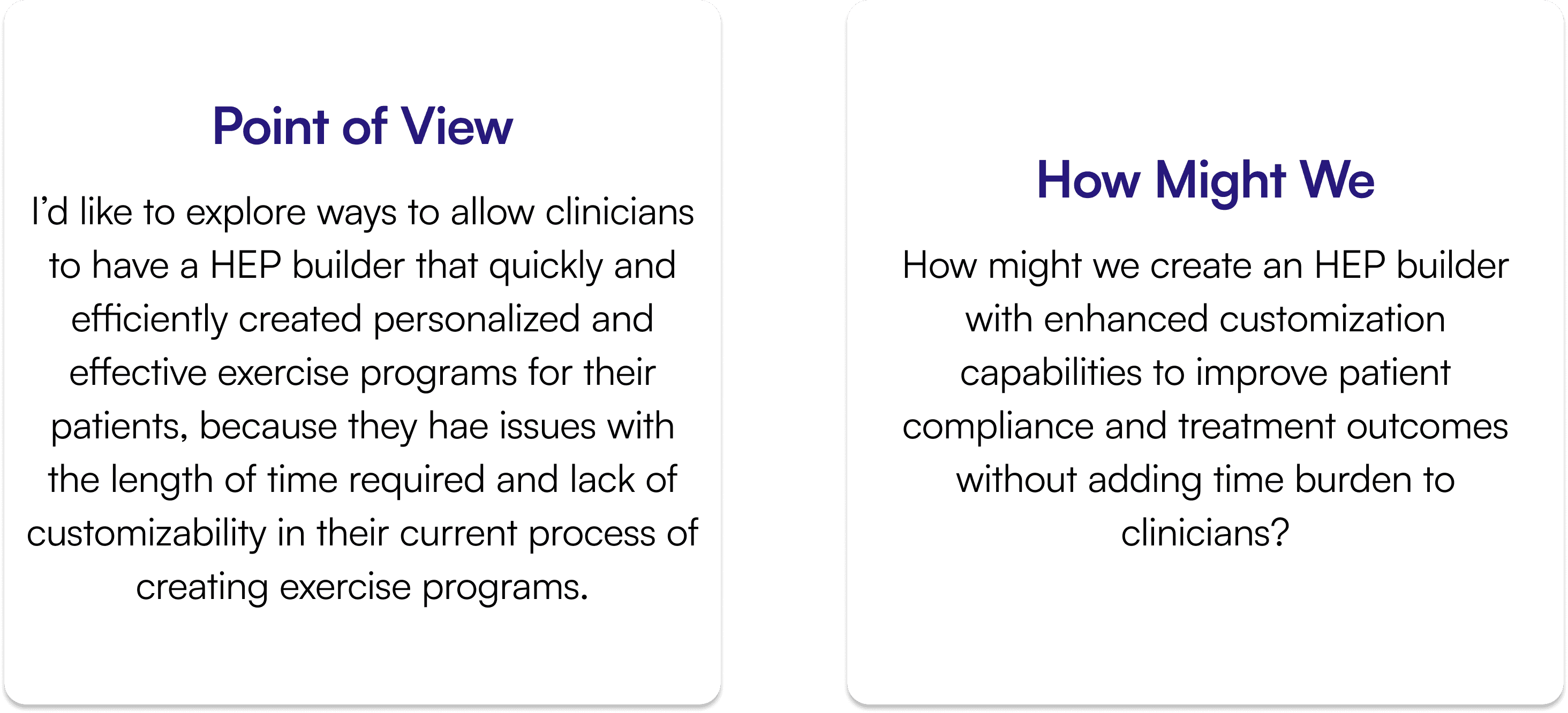
Clinicians need a way to quickly create personalized, effective exercise programs for their patients, but current tools require too much time and lack the customization necessary for quality care.
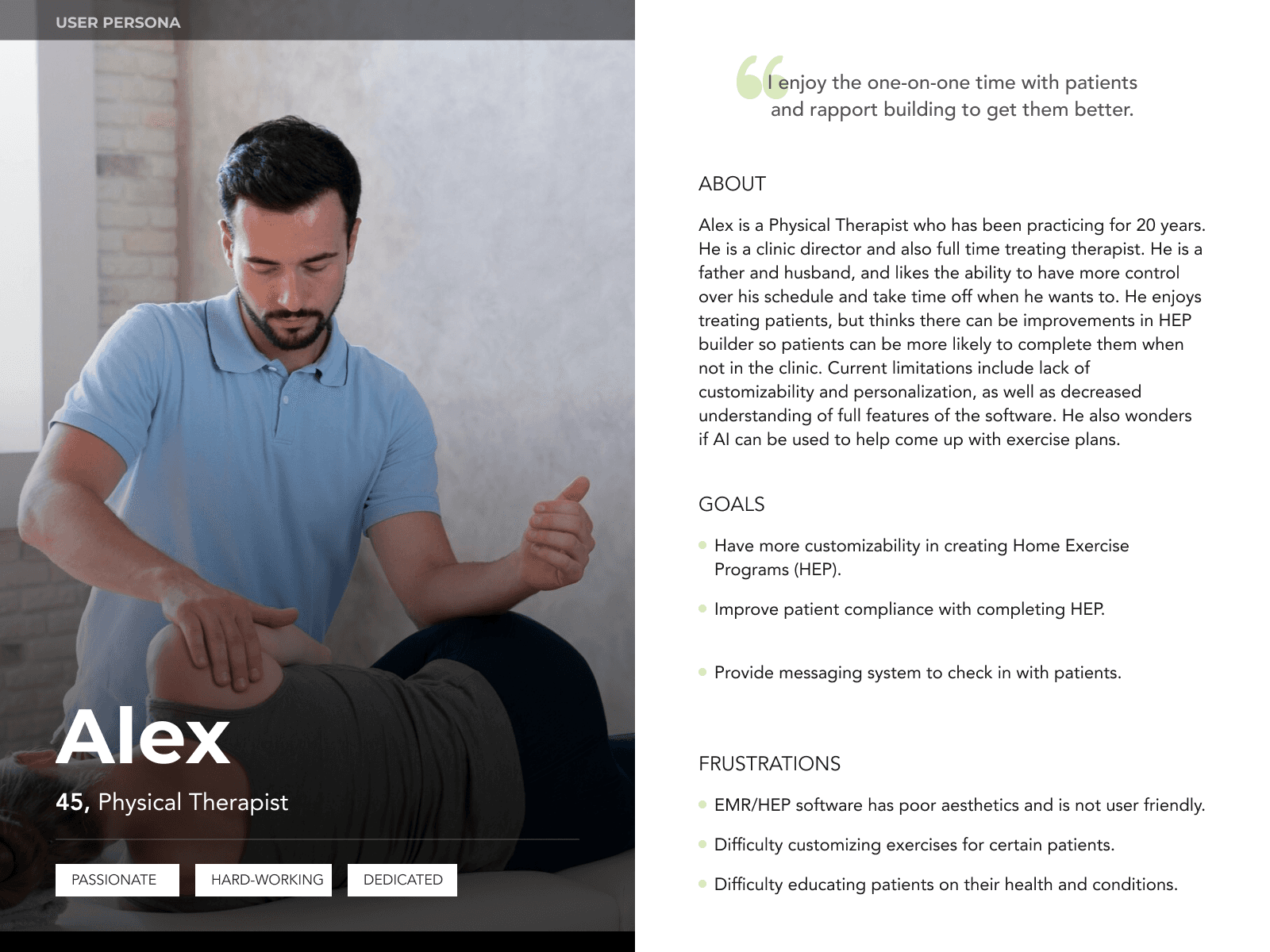
Using insights gathered from the user interviews, I created a user persona to reflect the personality types of the users and their pain points and goals.
Alex is an experienced PT who wants to have a better HEP builder and a way to keep patients engaged and compliant in their treatment/plan of care. He gets frustrated with poorly designed and not user friendly EMR/HEP software.
To ensure the solution addressed real clinician needs, I then translated these insights into Point of View and How Might We statements.
Ideate and Prototype
Structuring the experience.
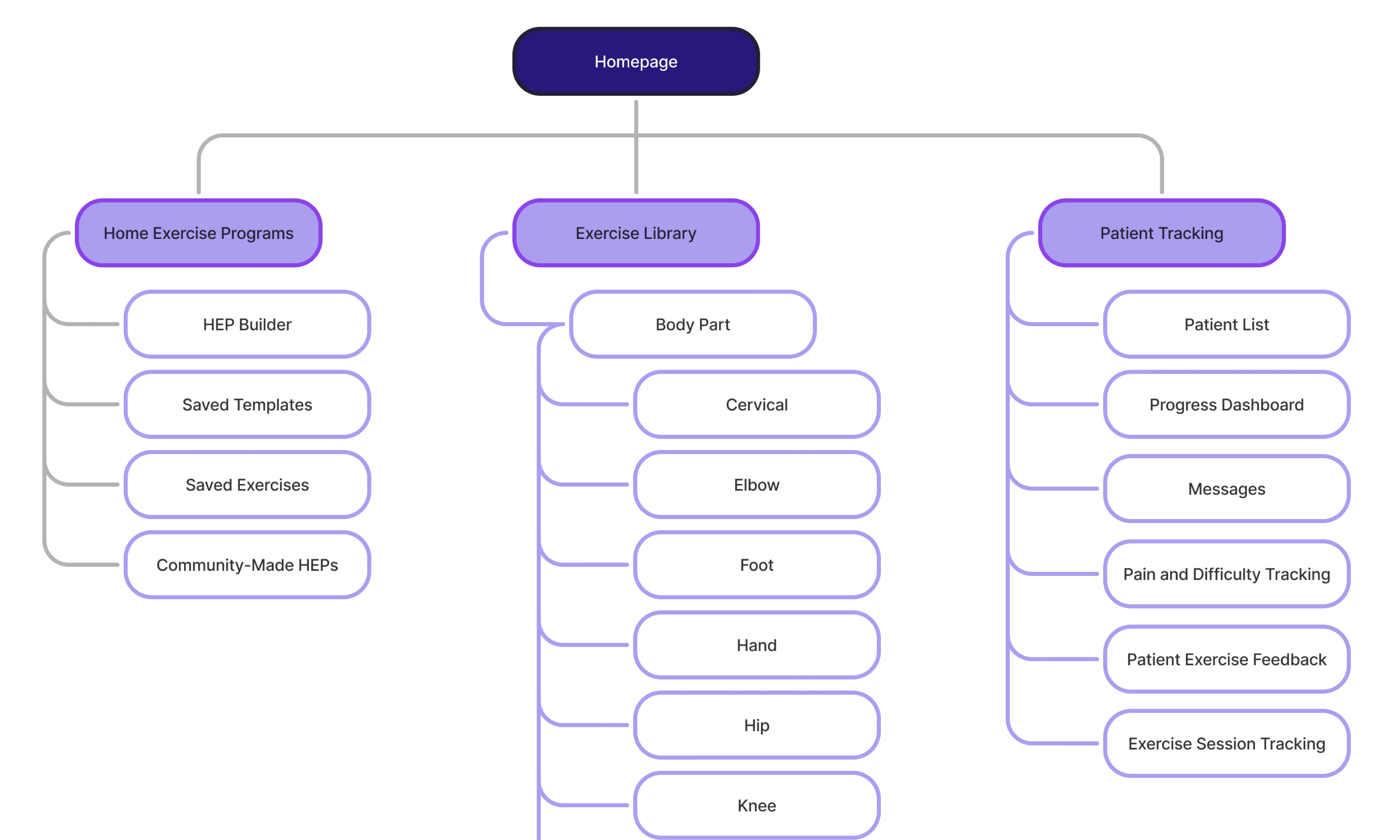
Based on research insights, I organized the platform into three main sections that mirror clinician workflows: building HEPs, browsing exercises by body region, and managing patient care through tracking and communication tools.
Designing and testing solutions — from low fidelity to high fidelity.
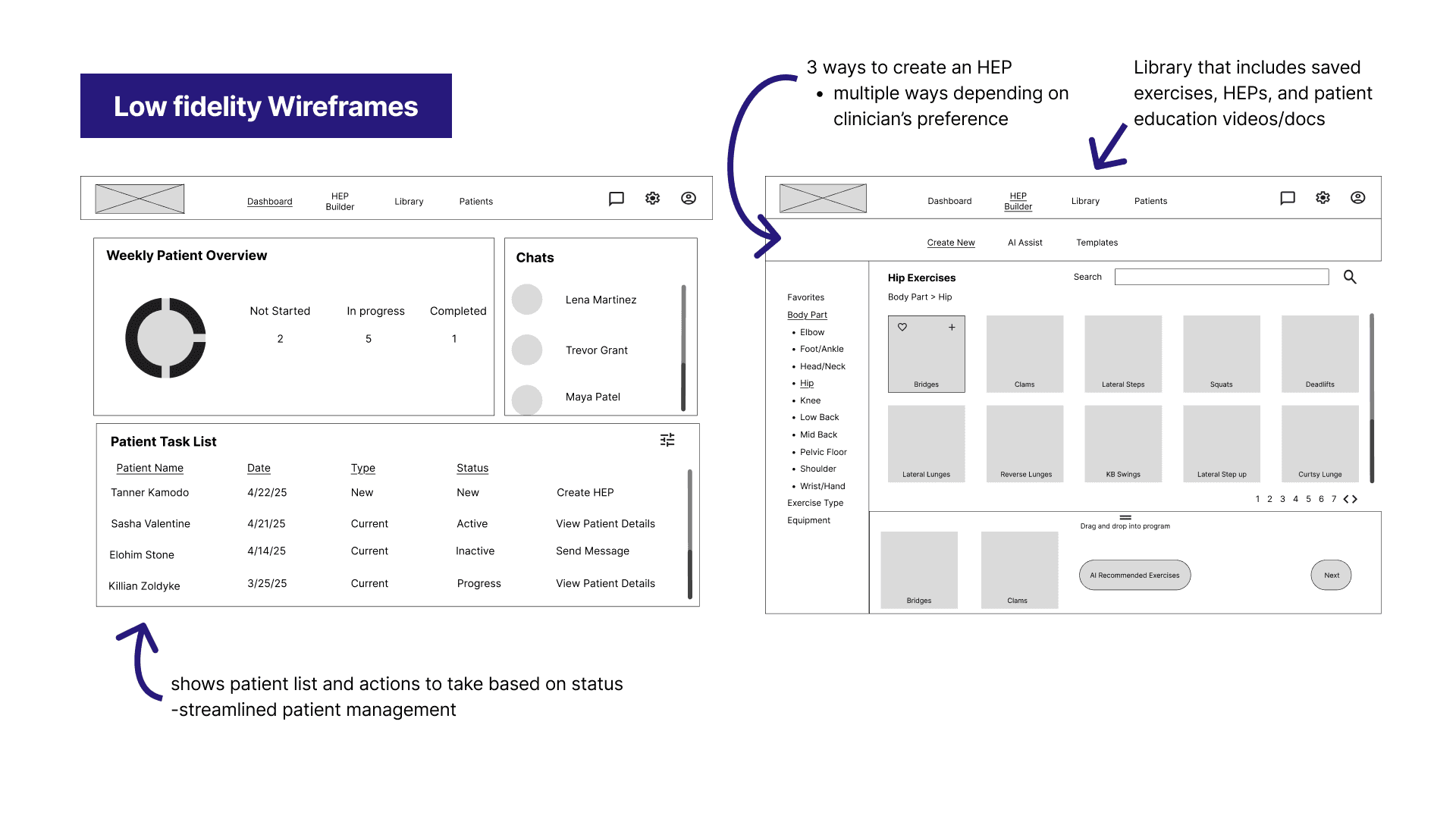
I led the ideation phase with low fidelity wireframes of different layouts, with the goal of keeping the design simple and intuitive while still solving the user's problem.
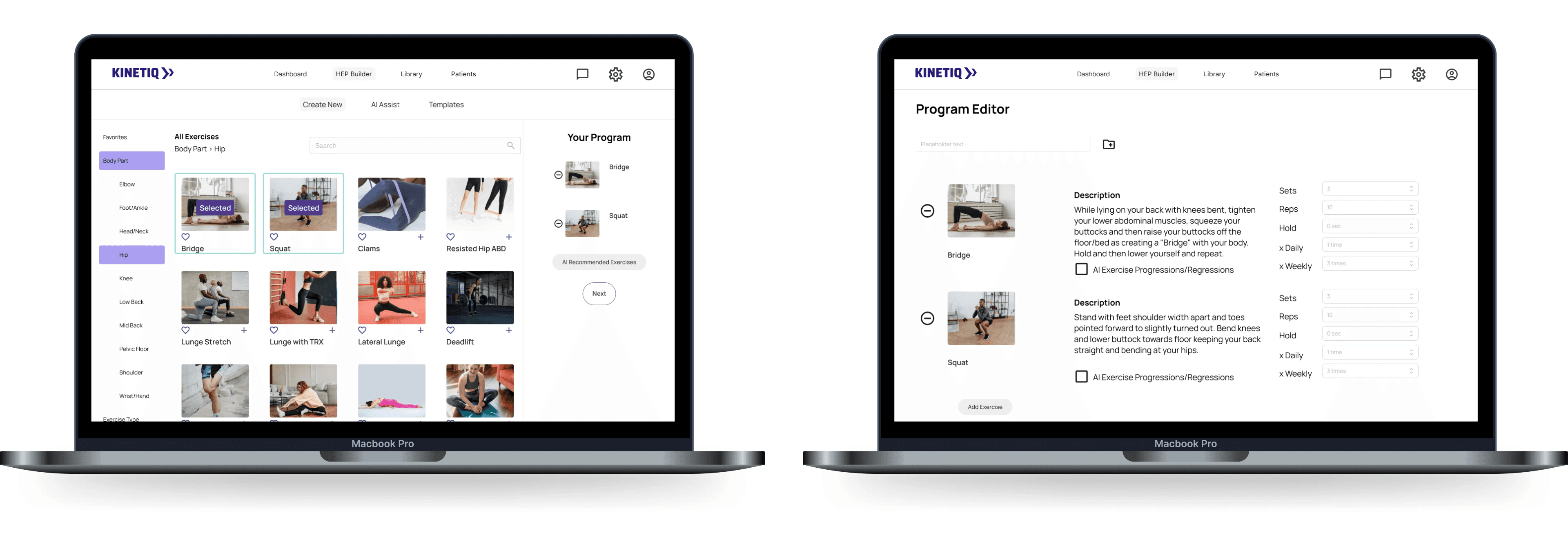
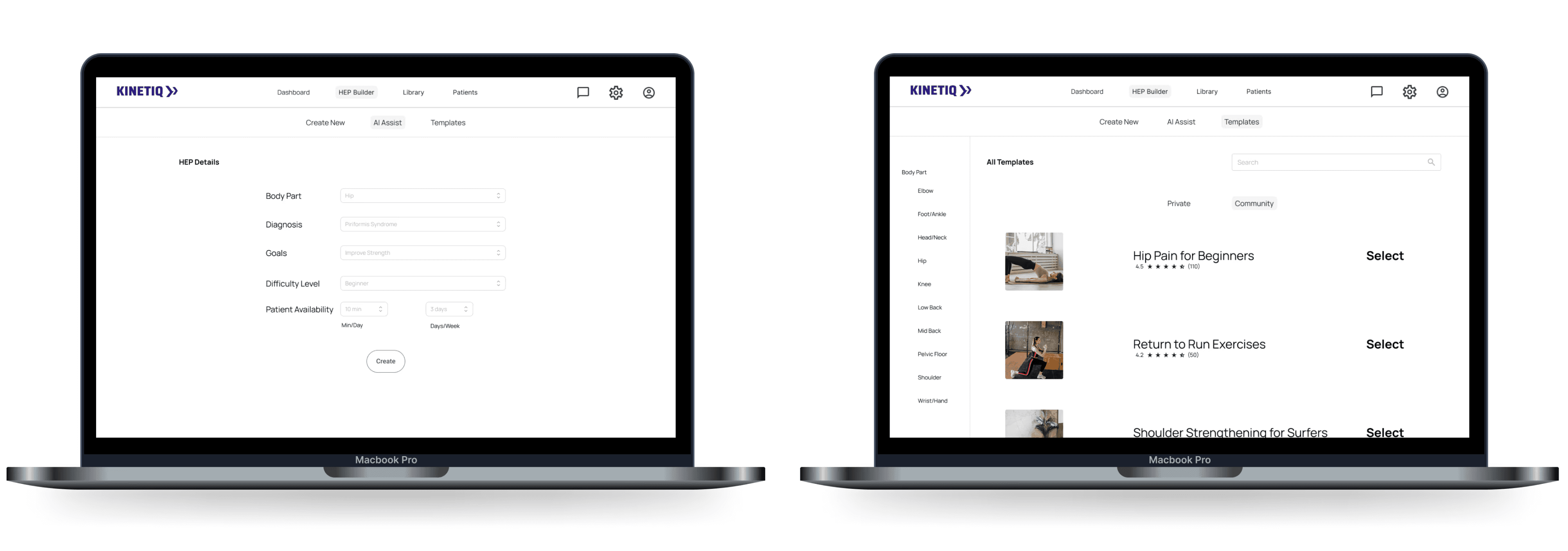
The design includes multiple ways of creating an HEP as well as patient management features.
Manual Creation
AI Assist
Templates
After initial testing of the flow and layout of the low fidelity wireframe, the logo and branding elements were added to create the high fidelity wireframes.
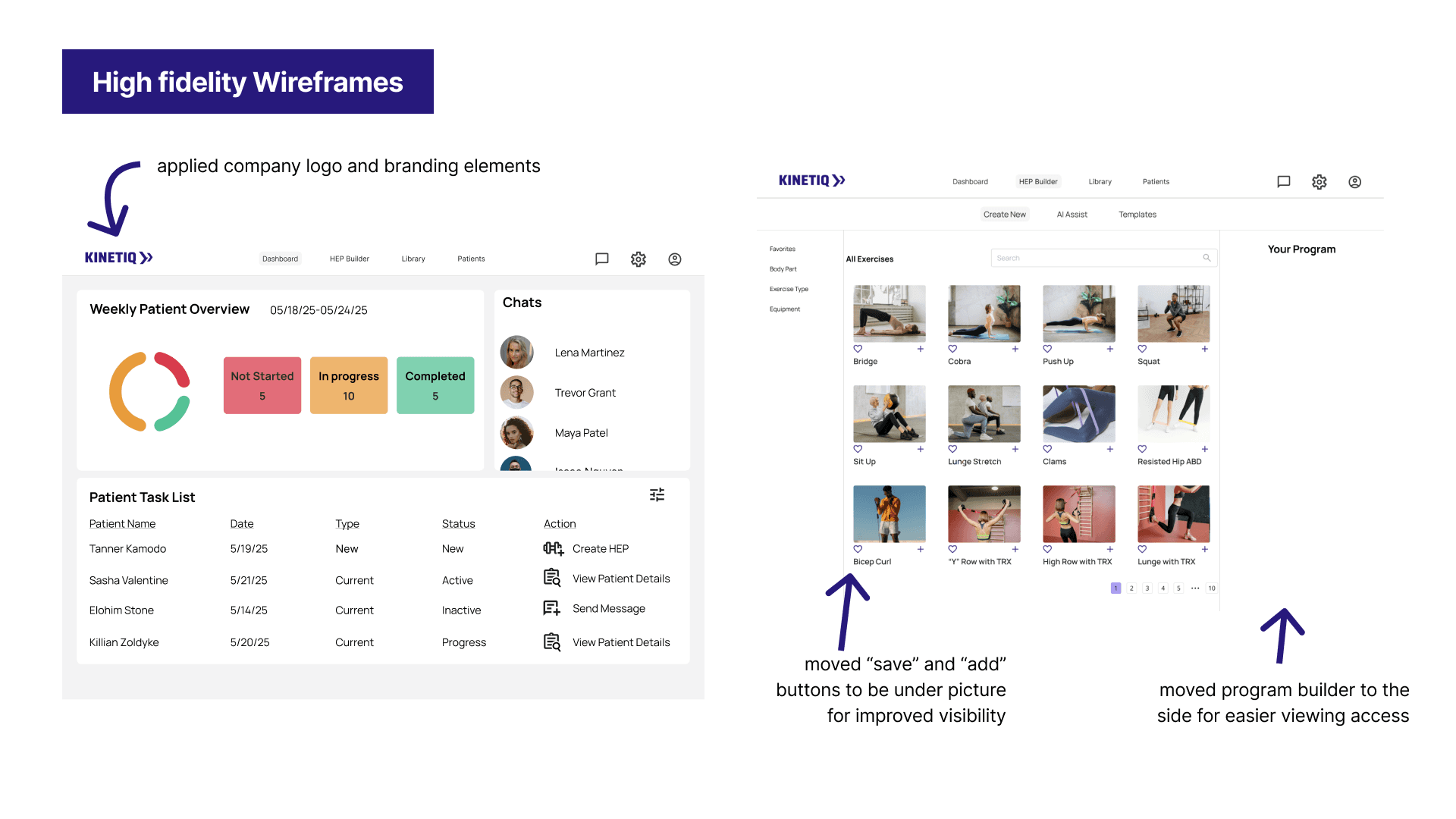
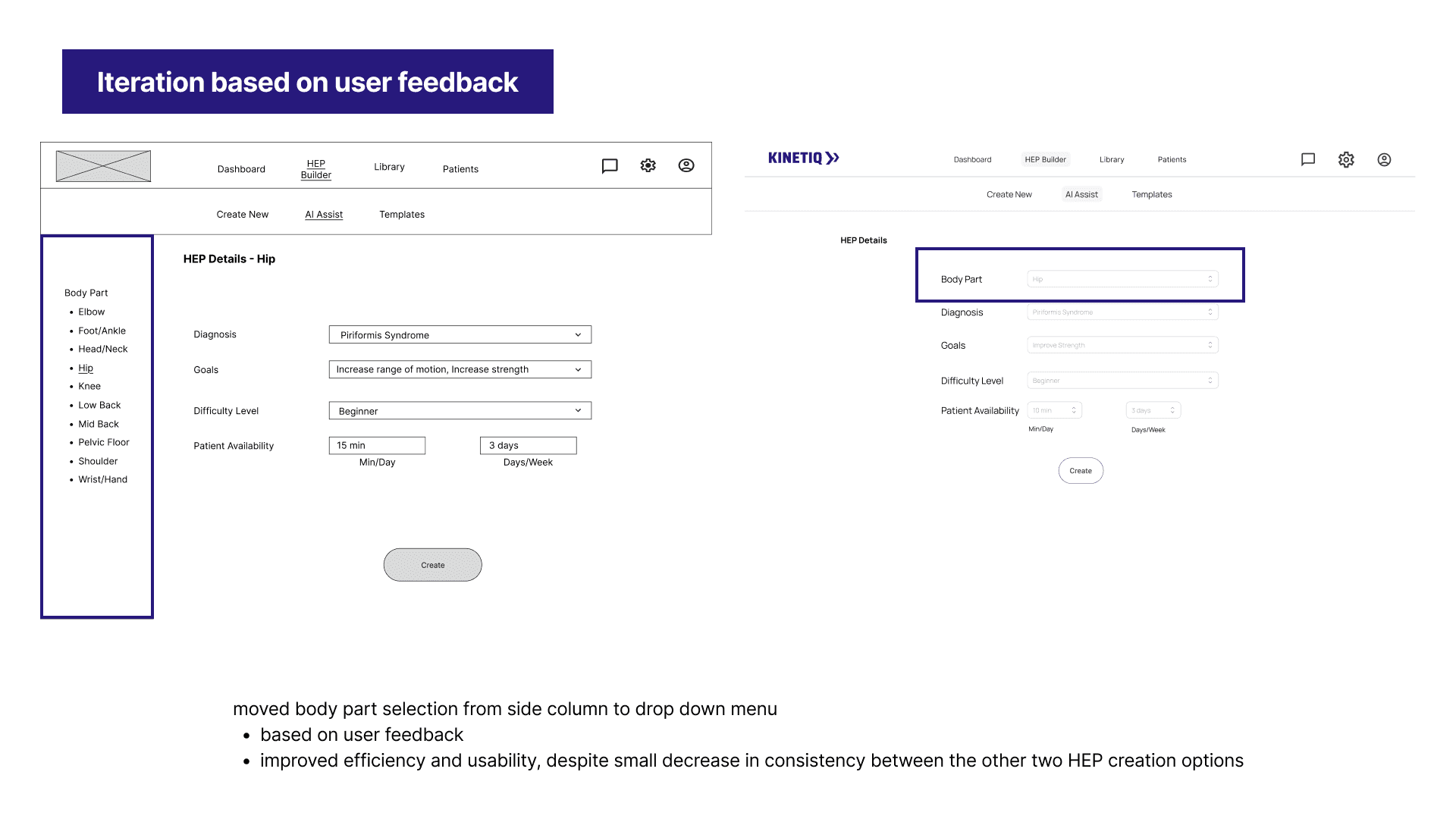
Notable iteration to layout was created based on user feedback for simplicity and ease of use.
Final Designs
The final design achieved 100% task completion in testing. Users found the layout intuitive and easy to navigate, validating the refinements made during iteration. I applied minor polish to ensure consistency across all design patterns.